

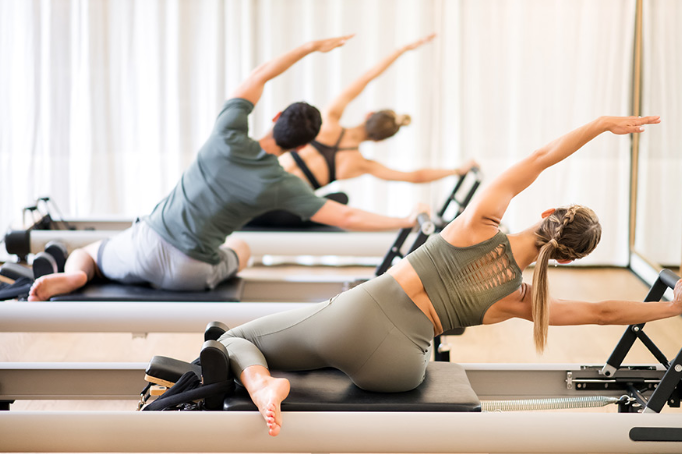
Walk into a reformer Pilates studio for the first time and the equipment alone will catch you off guard. It looks almost clinical — a sliding carriage, a set of springs, straps hanging from either end. Nothing about it suggests the kind of workout that leaves experienced athletes genuinely humbled. But that is exactly what happens. The springs do not just add resistance; they expose imbalance. If the left side of the body is pulling harder than the right, the carriage tells on you immediately. There is nowhere to hide, which is precisely why reformer Pilates in Newportdraws a far more serious crowd than people expect.
Why Gyms Fall Short
Standard gym machines are built around convenience. They guide the body through a fixed path, which means stronger muscles can — and routinely do — take over from weaker ones without anyone noticing. The reformer works differently. Movement on it requires the body to stabilize itself whilst producing force, which drags the deep postural muscles into the conversation whether they are ready or not. The transverse abdominis, the hip stabilisers, the small muscles around the shoulder joint — these rarely get meaningful work in a conventional gym session. On the reformer, they are never off duty. That distinction matters more than most people realise until they have experienced both.
The Chronic Complaints It Addresses
Lower back pain that has been managed rather than resolved. A shoulder that protests during overhead movement. A knee that has never felt quite right since an old sprain. These are not random misfortunes. More often than not, they trace back to muscular asymmetry or a movement pattern that has quietly gone wrong over years. Reformer Pilates makes those patterns visible. Unilateral exercises — where each side of the body works independently — tend to surface discrepancies that bilateral training has been masking for a long time. A good instructor picks up on this quickly and builds sessions around correcting it, rather than working around the problem indefinitely.
What It Does to Posture
Posture rarely improves through reminders to sit up straight. It improves when the muscles responsible for holding the body upright are actually strong enough to do their job without effort. Rounded shoulders, a forward head position, a collapsed lower back — these are strength deficits as much as habits. Reformer Pilates in Newport rebuilds the posterior chain, meaning the back of the body, which modern lifestyles consistently undertrain. The long box exercises, the standing spring work, the footbar series — all of it develops the kind of strength that lets posture correct itself, rather than requiring constant conscious effort to maintain.
Who Is Actually in the Room
Reformer Pilates carries an unfair reputation for catering to a narrow audience. Spend time in a Newport studio and that idea falls apart quickly. Retired people rebuilding confidence after joint surgery share classes with dancers working on control, and people managing bone density issues train alongside those recovering from sports injuries. The reason this works is the spring system. Resistance can be reduced to the point where movement is almost supported, or increased to make the session genuinely demanding. That range is not a selling point — it is what makes the method clinically relevant across a wide spectrum of bodies, ages, and starting points.
Conclusion
Reformer Pilates in Newport keeps growing in reputation for a straightforward reason — it works at a level most fitness methods do not reach. It does not simply build surface-level strength or burn energy for an hour. It changes how the body organises itself, how it moves under load, and how it holds up over years of daily use. The persistent aches that seemed permanent often reduce. The movement that once felt laboured starts to feel easier. For people who have spent time in gyms without ever feeling genuinely better in their bodies, the reformer tends to be the thing that finally closes that gap. It is less about fitness as an aesthetic and more about the body functioning the way it was always supposed to.